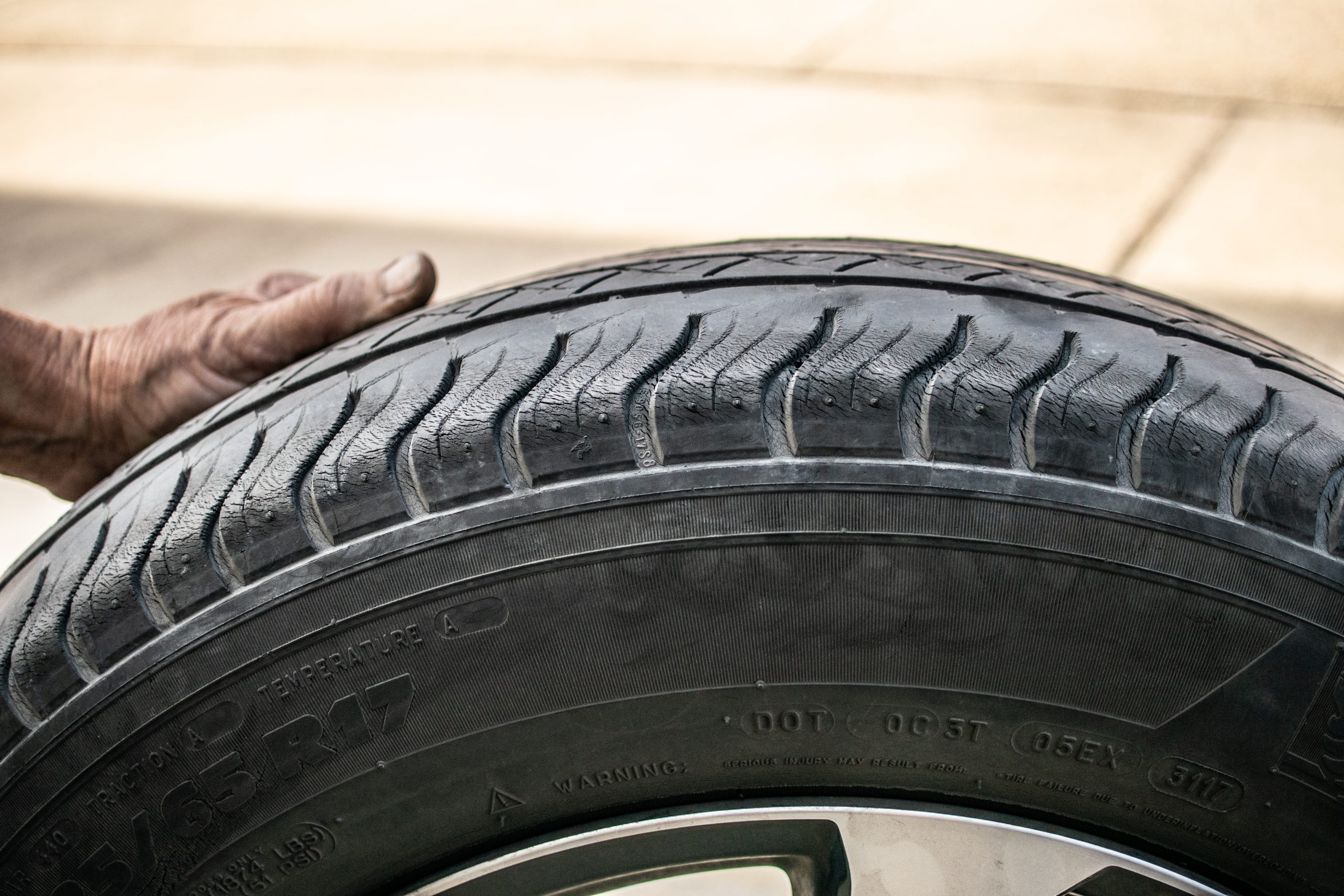
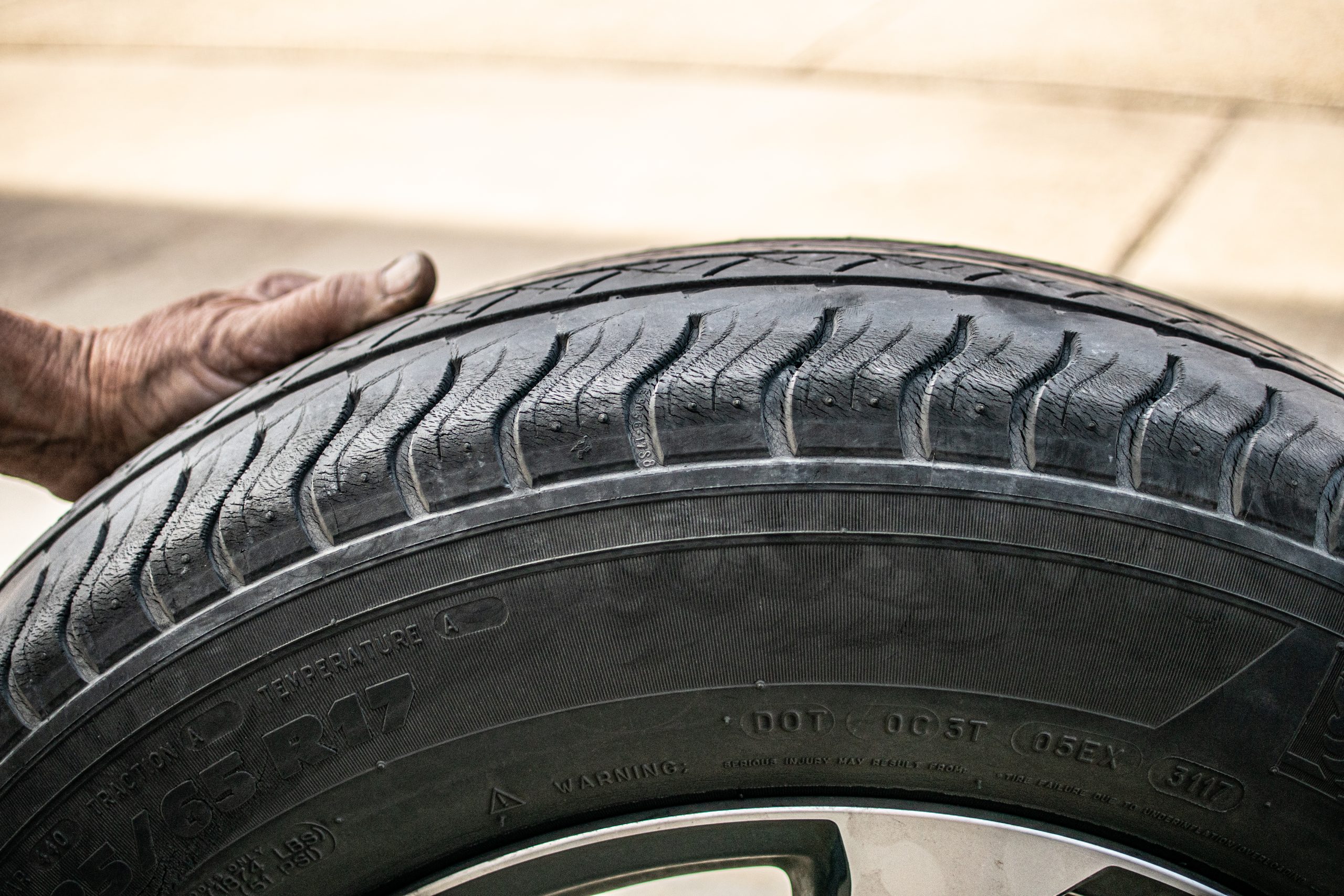
Have you noticed small cracks in the sidewall or between the tread blocks of your tires? You may be wondering, “Are my tires dry rotted, and do I need to replace them?”
Don’t panic. Seeing a few small surface cracks doesn’t necessarily mean your tire is about to fail.
Some fine cracking, sometimes called weather checking, can develop as tire rubber naturally ages. Tire manufacturers recognize that fine, shallow surface cracking can occur over time. What matters is the age of the tire, how severe the cracking has become, and the overall condition of the tire.
 Why Do Tires Dry Rot or Crack as They Age?
Tires are made from much more than a simple piece of rubber. They’re carefully engineered using rubber compounds, steel, fabric, and other materials bonded together to create a strong but flexible structure.
Unfortunately, age is an enemy of tires.
NHTSA explains that tire aging occurs as the rubber and other tire components change over time because of use, storage, and environmental conditions. Heat and sunlight can contribute to this aging process, which is especially relevant here in our New Orleans climate.
As a tire ages, chemical changes gradually affect the rubber and the bonds that help hold its materials together. Older tires become more susceptible to failure and separation, even when they still appear to have usable tread.
That’s why we look at more than tread depth when evaluating a tire.
How Old Is Too Old for a Tire?
At Tim’s Quality Car Care, we recommend replacing tires once they reach five years of age as part of our preventive approach to keeping our clients and their families safe.
Tire age can be especially important for vehicles that aren’t driven very often. A low-mileage vehicle might have plenty of tread remaining even though its tires have been exposed to years of heat, sunlight, and environmental conditions.
NHTSA specifically notes that tire aging is a greater concern in warmer southern areas of the United States.
In New Orleans, that’s something we take seriously.
 How Can I Tell How Old My Tires Are?
Fortunately, you don’t have to remember when you bought your tires.
Look on the tire’s sidewall for its DOT Tire Identification Number, sometimes called the DOT code. The last four digits tell you the week and year the tire was manufactured.
For example, if the last four numbers are 2522, the tire was manufactured during the 25th week of 2022.
Sometimes the complete DOT number is located on only one side of the tire, so you may need to look at the inside sidewall.
And don’t forget about the spare tire. Spare tires age too, even if they’ve rarely or never been used.
When Should Tire Cracking Concern Me?
Small, shallow surface cracks may simply be part of normal tire aging. However, deeper or widespread cracking deserves attention.
We recommend having your tires inspected if you’re noticing significant cracking, bulges, exposed internal material, unusual vibration, repeated pressure loss, tread separation, or anything else that simply doesn’t look right.
Wondering if your tires are dry rotted? Let the mechanics at Tim’s take a look!
Make a reservation today!
You may also be interested in: When to Replace Tires