Why does my car make a clunking noise when I hit a bump?
Home » Blogs » Why does my car make a clunking noise when I hit a bump?
Have you noticed a clunk, knock, or rattle from underneath your car when you drive over a bump? Maybe you hear it pulling into a driveway, traveling over rough pavement, or hitting one of our famous New Orleans potholes.
A clunking noise when going over bumps is a common suspension complaint, but unfortunately, there isn’t one part we can point to every time. Your vehicle’s suspension is made up of many components that move together, and wear or looseness in several different areas can create a similar noise.
At Tim’s Quality Car Care, our goal is to find the source of the noise rather than guess.
Here are a few common causes we see:
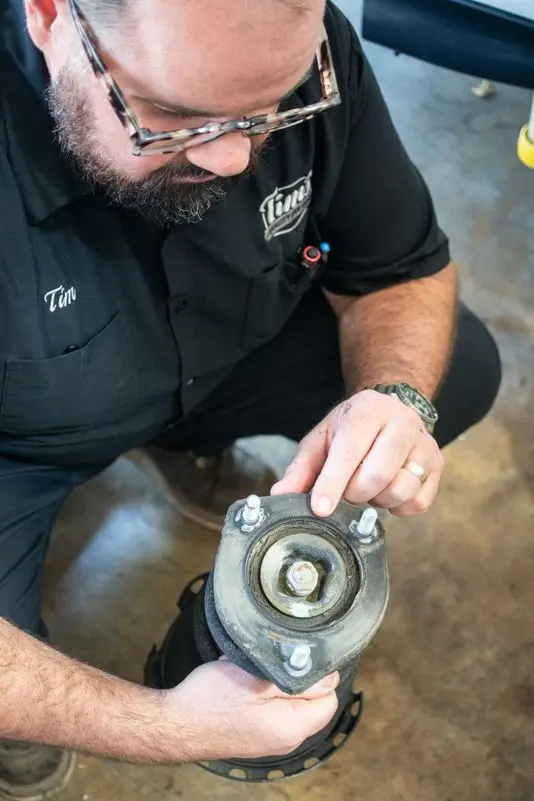
Worn or Loose Strut Mounts
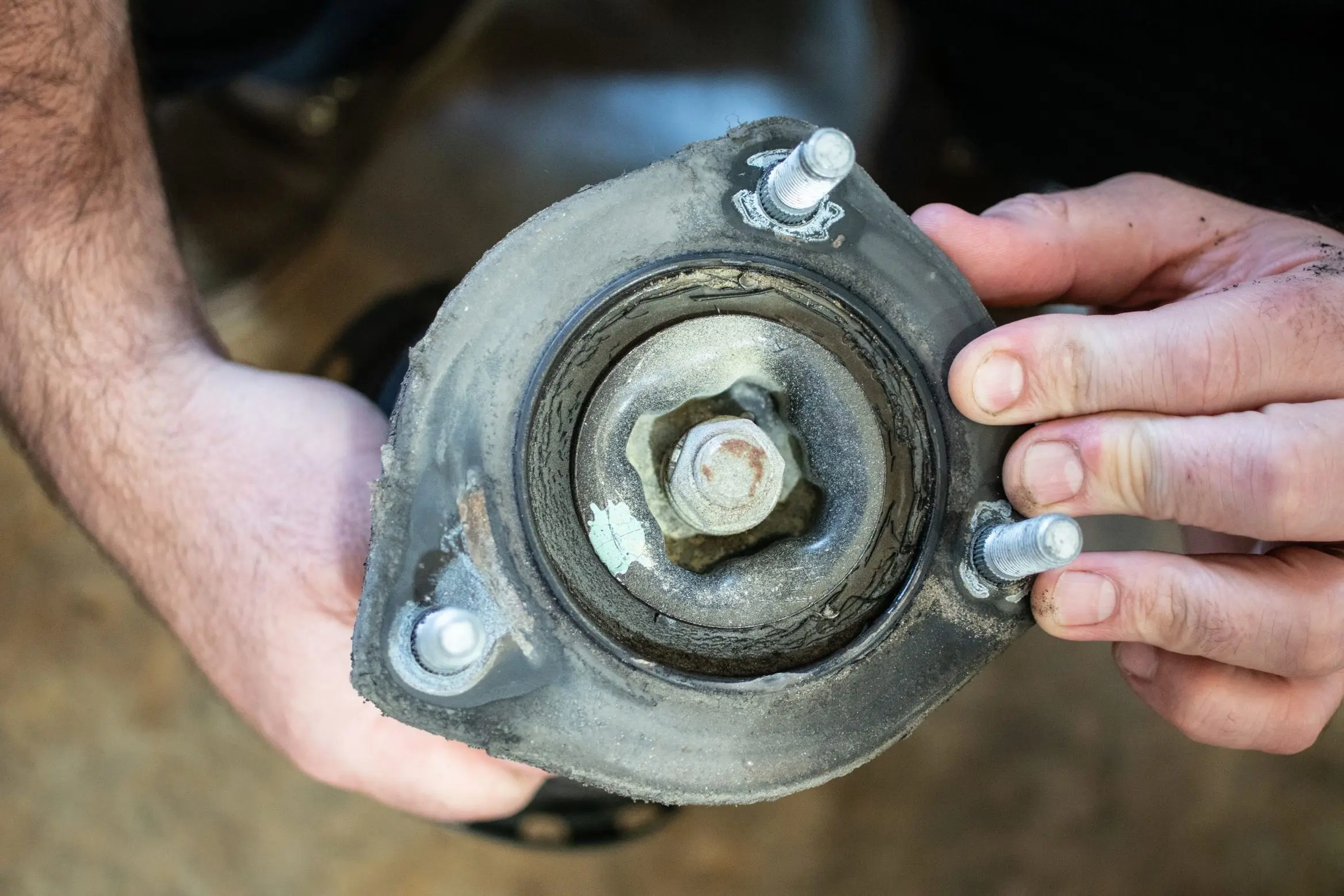
One possible cause of a clunking noise is a worn strut mount.
A strut mount connects the strut assembly to the vehicle and helps isolate suspension movement and vibration from the passenger compartment. Depending on the vehicle’s design, the mount can contain rubber bushings and bearings that allow the suspension and steering to move smoothly.
Over time, those bearings and bushings can wear.
As they deteriorate, additional space or slack can develop inside the mount. When the suspension moves up and down over a bump, that looseness can allow components to shift or move suddenly, creating the clunking or knocking noise you hear inside the vehicle.
Worn Suspension Bushings
Your suspension needs to move. If every suspension component were mounted solidly to the vehicle, your ride would be pretty uncomfortable!
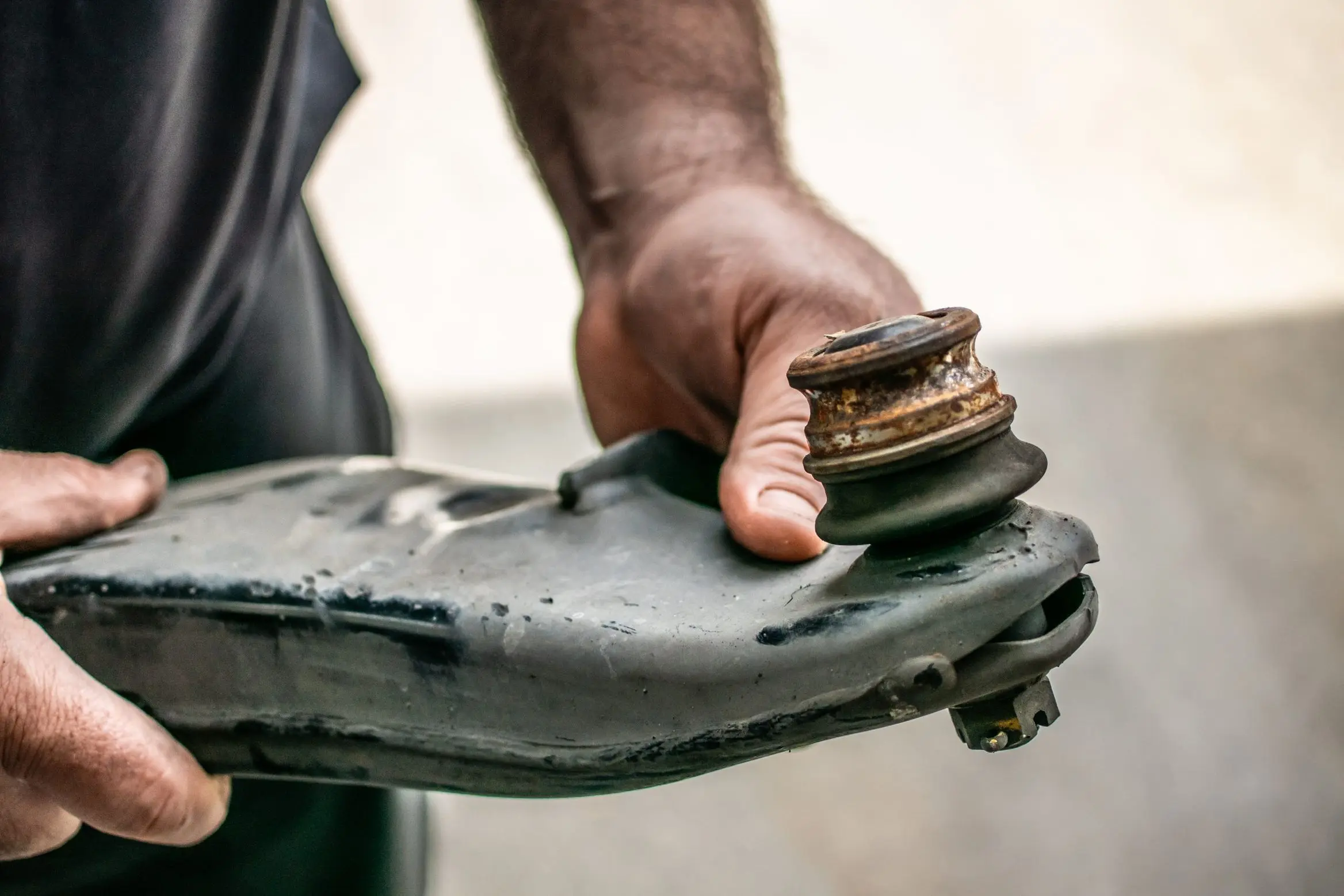
That’s why many suspension components use rubber bushings at their mounting points. These bushings help isolate noise and vibration while still allowing the suspension to move as your vehicle travels over bumps and uneven roads.
You’ll find bushings in many areas of the suspension, including control arms and the mounting points of some shocks and struts.
As these rubber bushings age, they can crack, deteriorate, soften, or separate. They can also be damaged prematurely by a hard impact.
Here in New Orleans, potholes and rough streets can certainly put suspension components to the test.
Once a bushing is damaged, the suspension component may have more movement than it was designed to have. That extra movement can result in a clunk or knock when driving over bumps.
Worn Sway Bar End Links
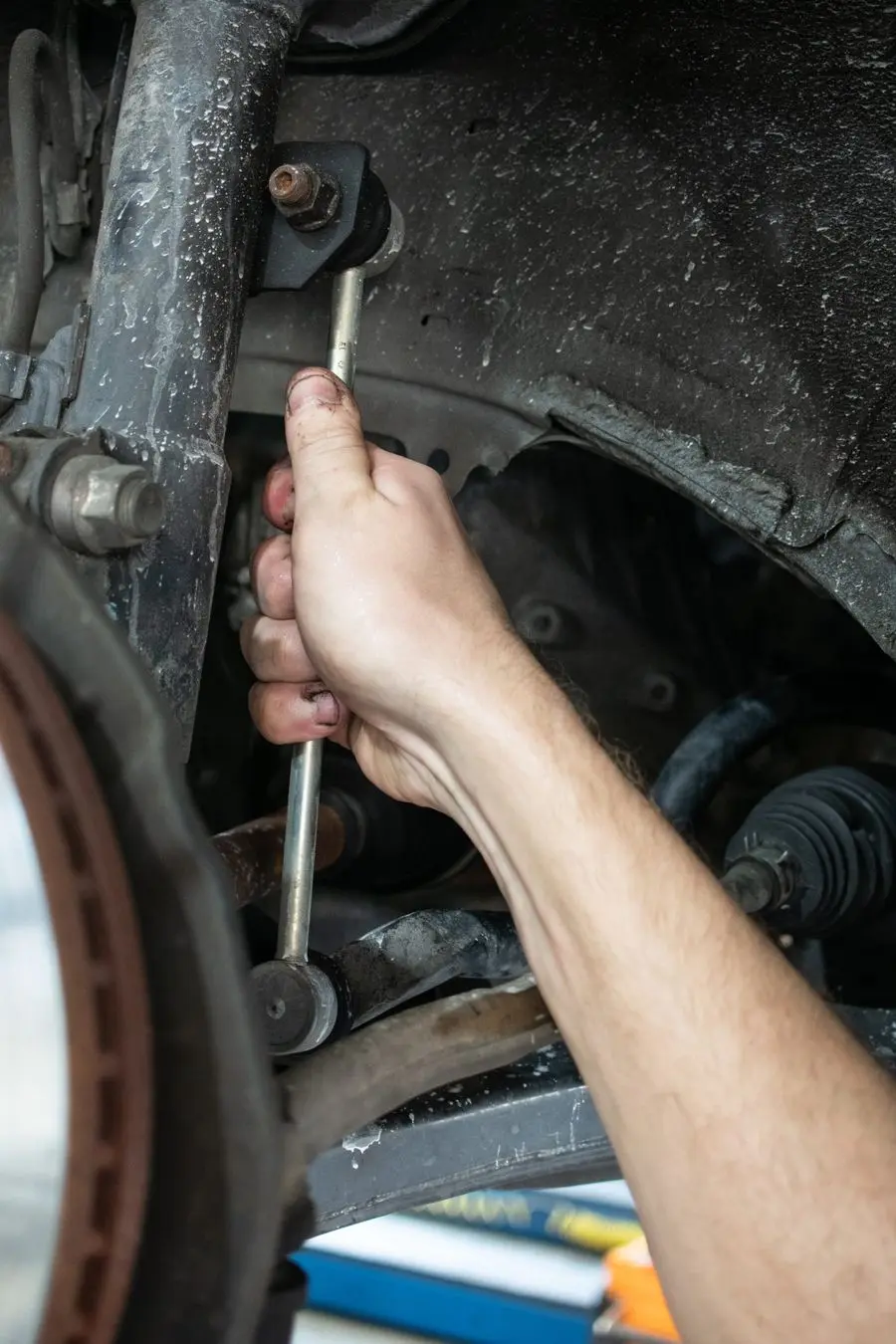
Another common source of rattling or clunking over bumps is the sway bar end link, sometimes called an anti-sway bar link or stabilizer bar link.
The sway bar helps control body movement as your vehicle turns. The end links connect the sway bar to the suspension so everything can work together.
Many sway bar end links use small ball-and-socket joints at each end. These joints need to move freely as the suspension travels up and down.
As the joints wear, they can develop slack or looseness. That extra movement can create a light rattle, knock, or clunk, particularly when traveling over smaller bumps or rough pavement.
There Can Be Other Causes of Suspension Noises
Strut mounts, bushings, and sway bar end links are only a few possible causes.
Ball joints, tie rods, shocks, struts, springs, loose hardware, and other steering or suspension components can sometimes produce similar noises. Occasionally, a noise that sounds like it’s coming from the suspension isn’t actually a suspension problem at all. That’s why we don’t recommend diagnosing a vehicle based on the sound alone.
We Check Your Suspension During Every Digital Vehicle Inspection
At Tim’s Quality Car Care, paying attention to every detail is one of our core values.
That’s why we check your vehicle’s suspension as part of our Digital Vehicle Inspection at every visit. Our technicians look at shocks, struts, bushings, steering components, tires, and other important areas of the vehicle.
If you hear a clunk or think you are having a suspension problem, let us take a look!