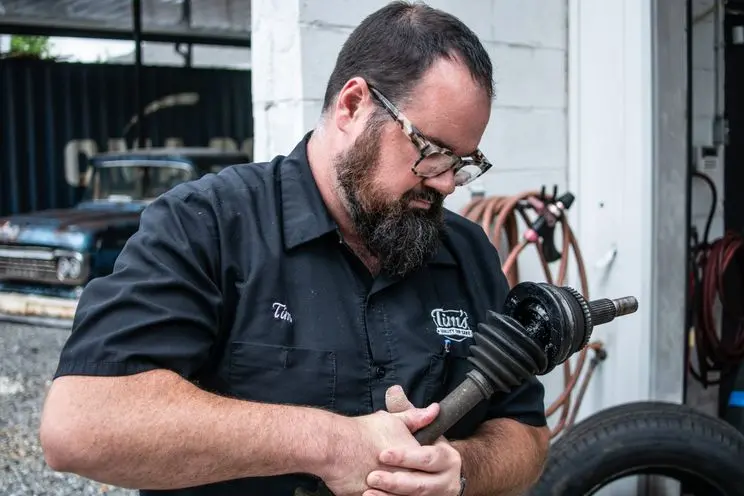
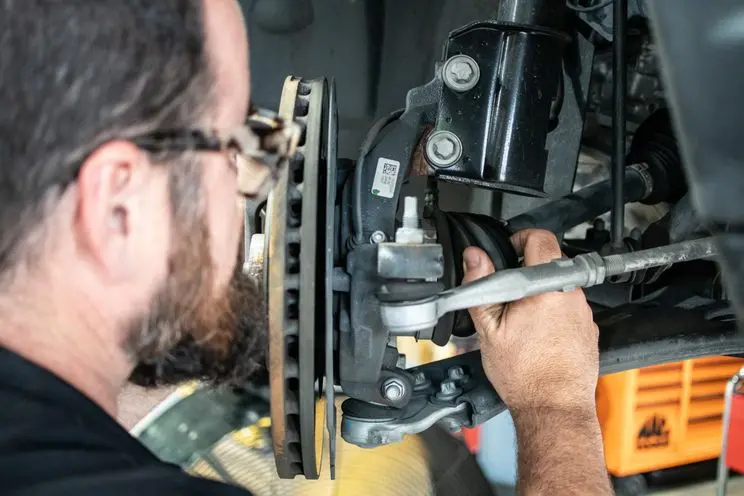
Constant Velocity or CV Shafts are a big part of how your car drives down the road. CV shafts are the mechanical link between your transmission/differential to your wheels. While supplying a safe link to the wheels your CV Shaft also needs to be able to articulate with your suspension and turn. Using two keyed metal cups and steel rollers on both ends of the shaft allows it to move with the vehicle.
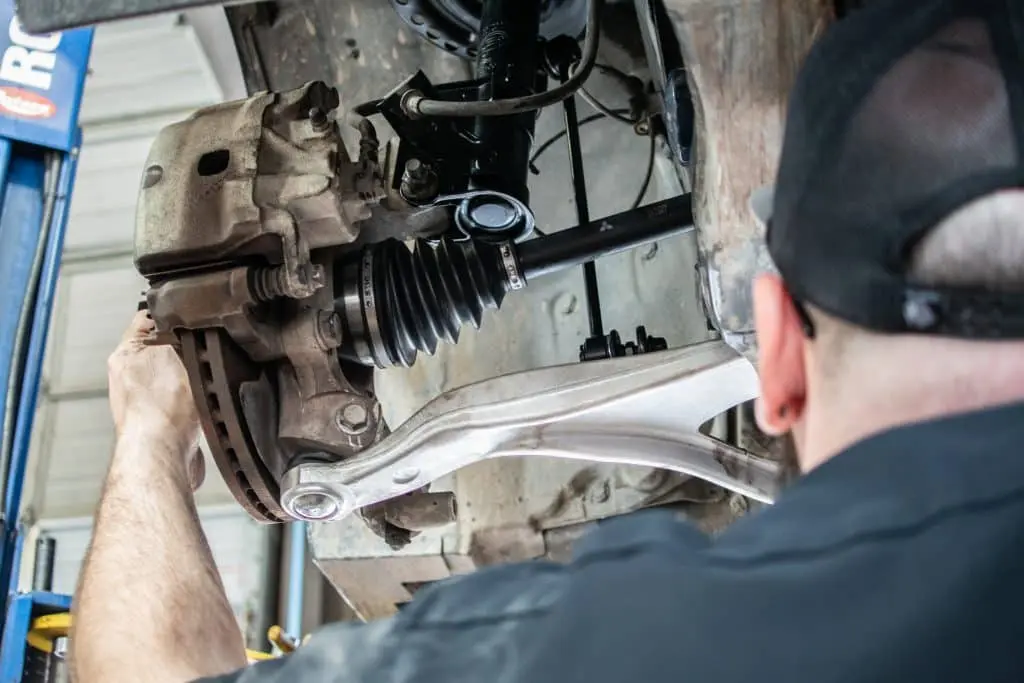
4 Signs your CV Shaft is bad
1) If you can hear a series of clicks while turning and accelerating or while making parking lot maneuvers you may have a bad CV Shaft. The click noise could be internal slack developing in the axle.
2) If you can feel a shake or vibration while accelerating up to or at highway speeds you may have a bad CV shaft. As CV shafts wear they develop internal slack and can become out of balance. The shake may be due to CV shaft imbalance.
3) If you see a dark green or black colored thick jelly-like grease inside of your wheel well or inside of your vehicle’s rim you may have a bad CV Shaft. The moving parts of CV shafts are inside of rubber or neoprene boots. Leaking or torn boots will cause the internal lubrication to sling out of the shaft while driving down the road.
4) If you see a visible tear or missing boot on your CV Shaft you have a bad CV shaft. The boot protects the moving parts of your CV Axle and a torn boot means the joint behind the boot is not lubricated or protected.
Let the mechanics at Tim’s check out your CV Shaft and help keep you in safe and reliable transportation! Make a reservation today!
You may also be interested in: CV Shafts: What are they and how do they fail?